5 Zero-Waste Indian Recipes for an Eco-Friendly Table
Five Indian recipes that rescue the scraps most kitchens throw away — peels, stale roti, vegetable greens — plus how to serve them on compostable bagasse and compost the whole meal, plate and all.
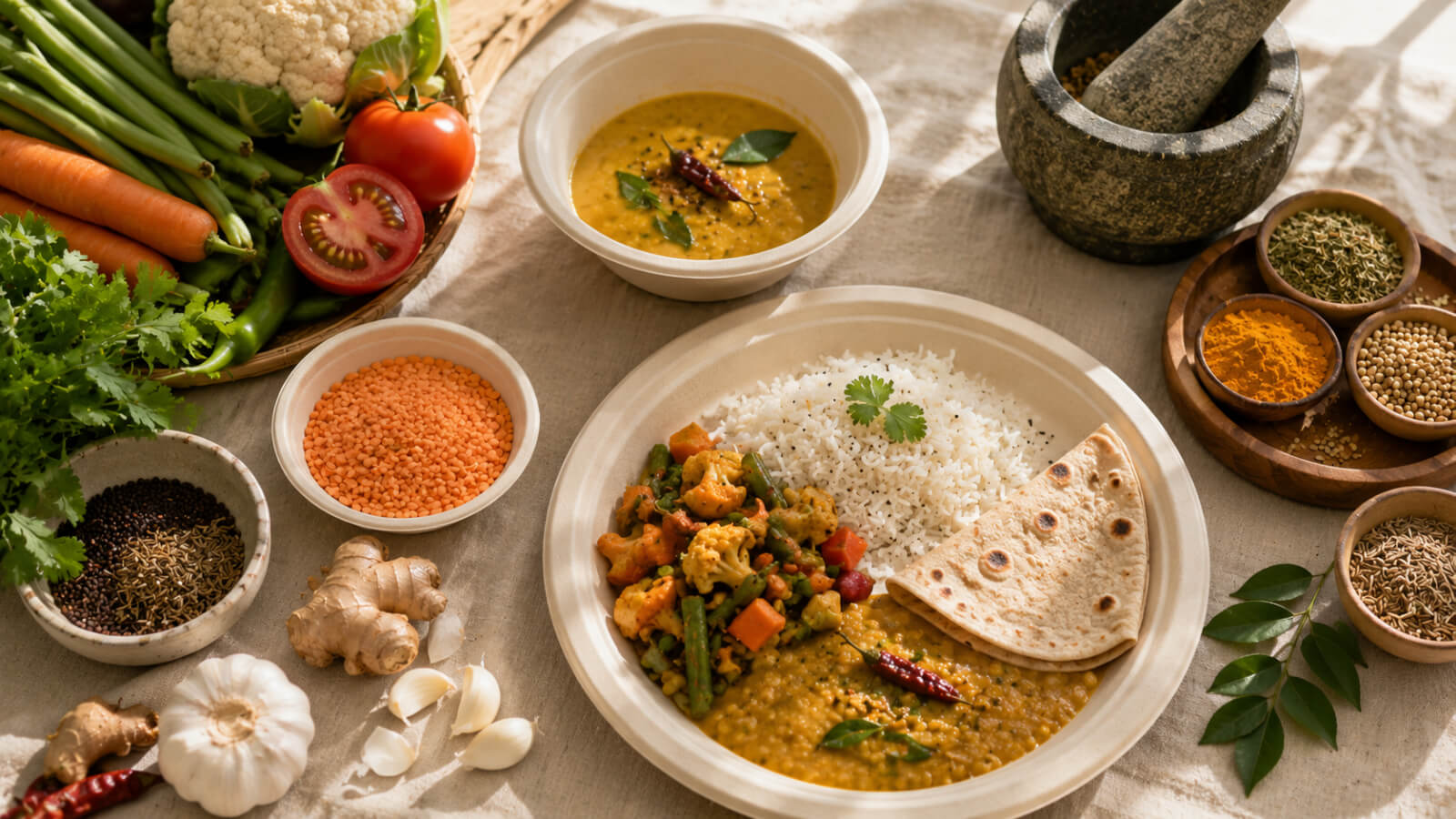
An eco-friendly meal isn't just about what you serve it on. The bagasse plate composts — but the bigger win is the food waste you never create in the first place. The Indian kitchen has always known this: chilka chutney, roti upma, kele ke chilke ki sabzi — these aren't trendy "zero-waste" inventions, they're how our grandmothers cooked when nothing got thrown away.
Here are five recipes that rescue the scraps most kitchens bin, the bagasse piece that suits each, and how the whole meal — peels, leftovers and plate — ends up back in the soil.
1. Lauki & turai chilka chutney (gourd-peel chutney)
The peels of bottle gourd (lauki) and ridge gourd (turai) are the single most-discarded scrap in an Indian kitchen — and they make a sharp, nutty chutney.
Method: Dry-roast 1 tbsp each of chana dal and urad dal until golden. Add the washed peels, 2–3 dry red chillies, a pinch of hing and a few curry leaves; sauté until the peels soften. Cool, then grind with tamarind, salt and a little water. Temper with mustard seeds.
Serve a spoonful on the side of a 4-inch dona — its square cup holds chutney without leaking, and it goes straight onto the compost afterwards.
2. Phodnichi poli (tempered stale-roti upma)
Leftover rotis hardening in the casserole? This Maharashtrian classic turns them into a 10-minute breakfast.
Method: Tear 4–5 stale rotis into bite-size pieces. Heat oil, crackle mustard seeds, cumin and curry leaves, add chopped onion, green chilli and turmeric. Toss in the roti pieces with salt and a pinch of sugar; sprinkle water so they soften without going soggy. Finish with coriander and grated coconut.
A bagasse bowl is the right serving piece here — deep enough to hold a portion, microwave-safe if you're reheating.
3. Mooli ke patte ka paratha (radish-greens paratha)
Most people buy radish for the root and throw the leafy tops in the bin. Those greens are peppery, iron-rich, and perfect in a paratha.
Method: Finely chop the washed radish greens, squeeze out moisture, and mix into whole-wheat dough with ajwain, green chilli, salt and a little besan to bind. Roll and cook on a tawa with a touch of ghee or oil.
4. Kele ke chilke ki sabzi (banana-peel curry)
A Bihari and UP staple that turns raw-banana peels — usually composted at best, binned at worst — into a tangy sabzi.
Method: Pressure-cook or boil the peels of 3–4 raw bananas until soft, then chop fine. Temper mustard seeds, onion, ginger-garlic and tomato; add turmeric, chilli and coriander powder, then the peels. Cook until it comes together; finish with amchur for tang.
Plate it as part of a full meal on a 9-compartment thali tray — sabzi, dal, rice, roti and pickle in their own bays, no separate bowls to wash or waste.
5. Overripe-banana sooji sheera
Those three black-spotted bananas nobody will eat are at their sweetest. Don't bin them — make sheera.
Method: Roast 1 cup sooji (semolina) in ghee until aromatic. Mash 2 overripe bananas and add, along with warm milk or water, sugar to taste, cardamom and a few raisins. Stir until it thickens and pulls away from the pan.
A small bagasse bowl or dessert cup serves a warm portion — and the natural sweetness of overripe fruit means you can cut the added sugar.
Then compost the whole meal — plate included
Here's where the eco-living loop closes. After the meal:
- Scrape the food scraps (and there should be far fewer now) into your green/wet bin.
- Wipe and tear the bagasse plate into a few pieces — it's a brown, high-carbon material, so it balances the wet nitrogen-rich scraps. Add it to the same compost.
- Skip the rinse. Sauce and oil are compost fuel; water just dilutes the pile.
Over time the peels, leftovers and the plate all become the same dark, earthy compost — a single closed loop from prep to soil. The step-by-step is in our guide to home composting bagasse plates.
Why it matters
India wastes a staggering amount of food — and most disposable tableware adds a second waste stream on top. Cooking the whole vegetable cuts the first; a fully compostable plate cuts the second. Together, a meal that started as "scraps and a disposable plate" leaves behind nothing but compost.
Ready to set the table? Browse the full bagasse catalogue, or read the science behind the compostability claim on our sustainability page.
Ready to buy?
Browse our full product catalogue or request wholesale pricing.